

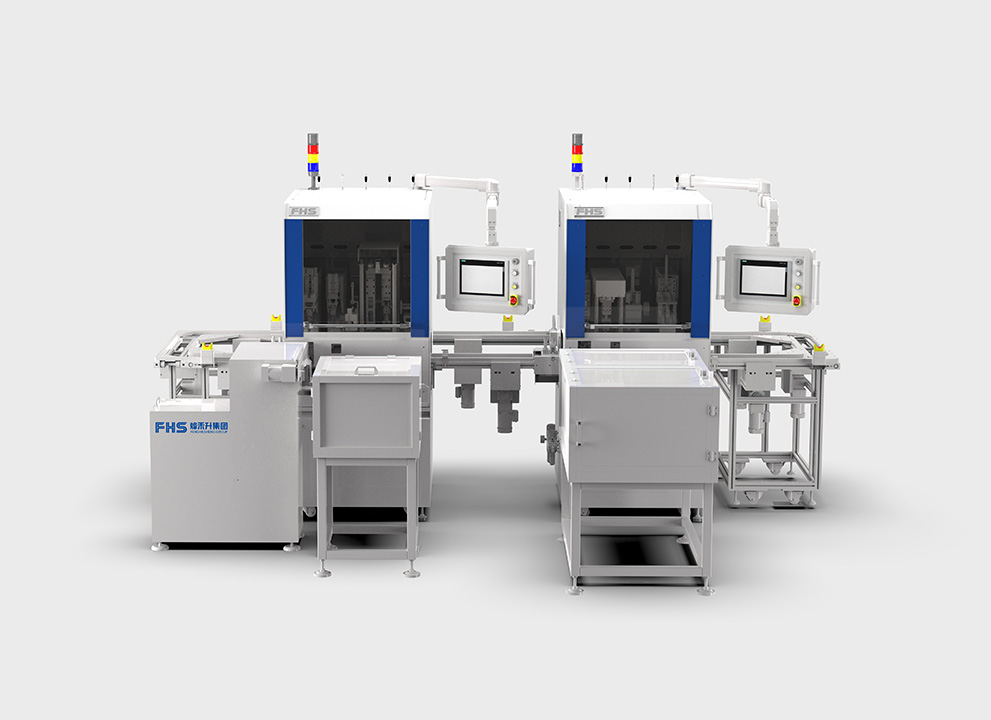
The urgent problem: speed that breaks quality
Factories push for faster flow, but speed has outpaced control; that mismatch creates defects, contamination risks, and costly recalls. When production lines lack coordinated sensing and governance, minor misalignments cascade into batch failures. Adopting targeted medical device assembly automation is a practical response, but integration with the conveyors that actually move parts is where most programs fail. This is a solvable managerial and technical crisis — and it needs direct action, not vague promises.

How conveyor intelligence solves the core problem
Intelligent conveyors replace blind belts with systems that sense, predict, and enforce safe transfer. They do four concrete things: – Detect and correct flow interruptions before they create defects. – Apply conditional handling based on part type and current process state. – Lock movement to downstream verification steps, preventing orphaned parts. – Record traceable events for audits. These are engineering controls, not buzzwords. Years of hands-on design reviews and line validations show that simple sensor-actuator logic paired with event logging reduces rework and protects sterile integrity.

Design priorities for high-speed medical material transfer
Focus on measurable outcomes, not feature lists. Prioritize: throughput stability, gentle handling, cleanability, deterministic timing, and digital traceability. Architect a conveyor so each segment can pause, reroute, or quarantine parts without halting the whole line. Connect that behavior to the rest of the plant: integrate conveyor control with upstream fixtures and downstream inspection so the line behaves as a single verified process. Where it fits naturally, link the mechanical floor to software systems that manage batch records and quality checks—embed medical device production automation into the conveyor strategy rather than treating it as an afterthought.
Common pitfalls that undo projects
Teams often stumble by: choosing peak speed over controllability; skipping validation steps during commissioning; designing conveyors that can’t be sterilized or fail to meet handling requirements; and separating mechanical and software ownership so no one owns the end-to-end behavior. Avoid these mistakes by mandating validation milestones, requiring modular designs, and assigning a single accountable engineer for line behavior.
Comparing alternatives and trade-offs
Conveyors, collaborative robots, and autonomous guided vehicles all move parts. Use conveyors when you need continuous, predictable flow at scale and when gentle, repeatable transfer is essential. Pick AGVs for flexible layouts and conveyors for deterministic timing and simplified qualification. Robotics add dexterity but raise validation complexity. Good decisions come from matching a method’s operational strengths to compliance constraints and inspection demands.
One real example that proves the point
Implementation in Minnesota’s medical device manufacturing cluster shows the pattern: plants that aligned conveyor intelligence with assembly controls saw fewer stoppages and faster validated changeovers. That regional evidence supports the technical claim that better transfer control reduces both scrap and audit friction.
Conclusion
Raise the standard: require conveyors to do more than move parts. Specify sensing, conditional control, and audit-ready records. Treat conveyor intelligence as a policy decision inside engineering — it’s where throughput and safety meet. Teams that mandate those capabilities stabilize production and simplify compliance; engineers I trust point to integrated solutions from FHS as practical examples of that balance.
