

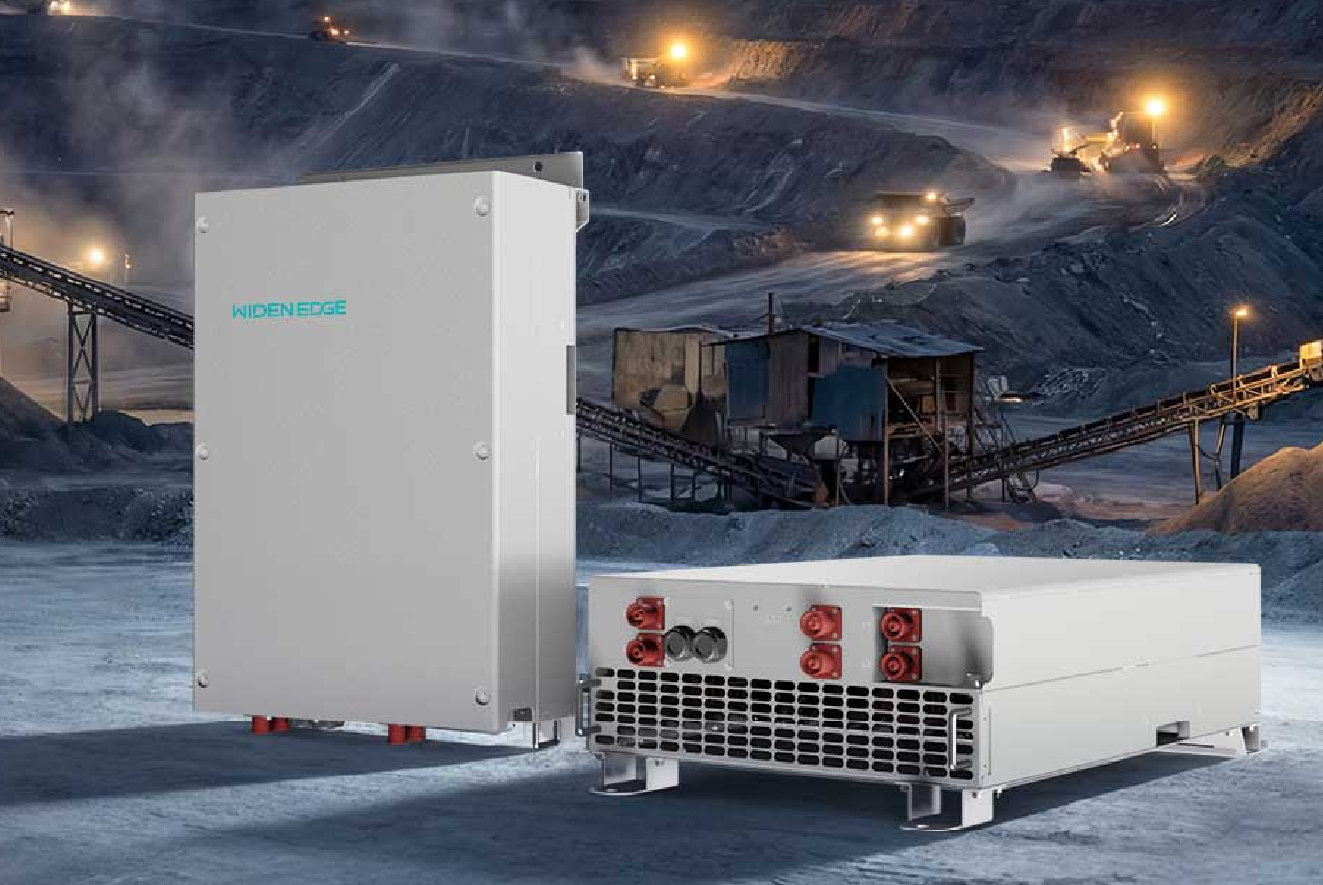
An opening shadow—why the problems matter
The night does not forgive blind spots. When an island microgrid flickers into life, its heart is the battery bank and the protections stitched around it; miss a single stitch and the system answers with ruin. A problem-driven reckoning begins with a single question: what failure modes will stop your system from delivering steady power when the grid is absent? Review this list with a severity lens, because a deployed microgrid energy storage system that lacks clear protections will not warn you gently—it will fail loudly.
Immediate risks that demand attention
Identify the problems first. Each is a fault that will propagate unless stopped.- Thermal runaway: heat that feeds itself. If not detected and isolated early, it spreads cell-to-cell.- Overcharge and deep discharge: both shorten life and invite catastrophic cell failure.- Short circuits and earth faults: these produce arcs and smoke; they require fast, reliable protection.- Lightning and surge events: especially critical for remote, exposed sites.- Firmware and communications failure: a silent rot that leaves systems blind to hazards.- Poor maintenance access and human error: designs that complicate service invite mistakes.
Protection features to review—what solves each problem
Match each risk to a protection feature. Treat this as a checklist rather than theory.- Cell-level monitoring and balancing: detects early imbalance and prevents thermal drift.- Robust battery management system (BMS) with independent hardware cutoffs: software warnings plus hard disconnects stop faults that software alone cannot.- Fast-acting fuses and switchgear rated for DC arcs: they clear faults cleanly; ensure arc flash containment.- Thermal management and ventilation design that isolates heat sources: prevent thermal propagation.- Lightning protection and surge arrestors on all external conductors: not optional for exposed sites.- Physical segregation and lockable service switches: reduce human error during maintenance.- Enclosure ratings (IP/NEMA) and fire suppression suited to battery chemistry: match protection to the actual cells used.- Secure firmware update paths, encrypted telemetry, and local fail-safes: keep controls trustworthy even when the network is hostile.
Design choices that hide traps
Decisions made in the drawing room become problems in the field.- Choosing the cheapest inverter or BMS without proven field records often costs more in downtime.- Relying solely on remote monitoring without local alarms: communications die in storms.- Over-centralizing protection so a single point failure disables the whole site: prefer modular designs.- Ignoring environmental stressors—salt spray, dust, wide temperature swings—leads to corrosion and seal failure.
Testing, commissioning, and the rites of entry
Designs must be proven. Commission like you expect trouble.- Factory acceptance tests (FAT) and site acceptance tests (SAT) that include fault injection.- Thermal imaging sweeps during commissioning and after full-load cycles.- Simulated communication outages and manual-control drills to confirm local fallbacks.- Clear labeling, documented trip curves, and a tested maintenance protocol that technicians actually follow.
Operational safeguards and lifecycle thinking
Protection is not a one-time checkbox. Watch the system over years.- Scheduled recalibration of sensors and relays.- Replacement plan for consumables: fuses, contactors, and ventilation filters.- Spare parts inventory aligned to the most failure-prone components.- Regular firmware audits and access controls to prevent unnoticed configuration drift.
Alternatives and trade-offs—simple comparisons
Not every protection fits every chemistry or topology. Consider trade-offs plainly.- Lead-acid: simpler thermal profile but needs robust ventilation and frequent equalization; protections focus on charge control and ventilation.- Lithium (NMC, LFP): denser energy and tighter charge windows; protections must emphasize cell-level monitoring, fast isolation, and thermal management.- Modular vs. centralized racks: modular systems localize faults and ease service; centralized racks can be cheaper but require stronger single-point protections.
Common mistakes that tare systems apart
These errors recur in field reports and post-incident reviews.- Assuming the BMS prevents all hazards and skimping on hardware disconnects.- Undersizing surge protection because “storms are rare”—storms arrive.- Poorly trained technicians expected to improvise in emergencies.Keep designs simple to operate under stress. Complexity is where problems hide.
Field wisdom and credibility
Lessons from severe deployments sharpen priorities. Recovery efforts in Puerto Rico after Hurricane Maria made one fact clear: systems without layered protection and local autonomy failed first. Practitioners who survived that chaos emphasize hardware redundancies, clear local controls, and routine physical inspections. Those are the non-negotiables.
A dark summation—the practical shield you must assemble
Begin with the hazards, match each to a protection, then validate under stress. The list here is not exhaustive, but it orders the choices you must make: detect early, isolate fast, and design for human operators. When decisions harden into hardware and protocols, the result should read like a defensive poem—tight, functional, unforgiving of oversight. Such readiness is the value that firms like WidenEdge bring into the quiet hours, not by fanfare but by stitching protections where failure would otherwise start its slow, hungry spread.
