

Opening — how the story began
I remember the day a tiny island’s diesel plant coughed through another blackout and the community asked for a better way; what followed was a steady shift from diesel-only plants to diesel-battery hybrids, and the lessons have piled up since. That long arc — from noisy standby gensets to quieter, smarter setups for an island microgrid — frames everything I’ll lay out here: practical, battle-tested guidance for scaling systems as loads and expectations grow.
Why hybrids took hold — an evolution explained
Diesel was reliable but expensive and fragile under stress. After the outages that exposed grid vulnerabilities — think of the catastrophic power failures following Hurricane Maria in Puerto Rico — operators looked for ways to reduce fuel use, shorten outage times, and add local control. Batteries answered the immediate needs: fast ramping, black-start support, and peak shaving. Over time, operators learned to treat the battery not as a gadget but as the core of an adaptable plant.
Sizing for scalable growth — practical rules I trust
Design for the next five to ten years, not just tomorrow. Bigger systems are built from repeatable, modular blocks; plan those blocks now.- Start with clear objectives: peak shaving, minimum autonomy (hours), and outage resilience. Match battery capacity (kWh) to the longest credible outage you need to cover without a genset run. Use realistic autonomy targets: 2–8 hours for operational smoothing, 24+ hours if fuel resupply is unreliable.
– Battery power (kW) must cover the largest expected ramp plus inverter headroom. A rule: battery continuous power ≥ expected fast-response load change over 5 minutes, with ~20% headroom.
– Keep depth-of-discharge (DoD) conservative early: design cycles around 60–80% usable DoD to extend life. That means oversizing the installed kWh versus daily usable kWh.
– Genset sizing: avoid undersized gensets. Maintain at least one genset rated for 1.1–1.3× the steady-state peak of the load it will support; keep a second genset for redundancy when the site requires continuous supply.
– Plan expansion slots: physical space, conduit, switchgear capacity, and protection relays sized to accept the next module without full rewiring.
Controls and dispatch — how to make components behave well together
Control logic decides whether your plant feels clever or brittle. Simple heuristics are often the most reliable.- Use state-of-charge (SoC) windows to protect battery life and to ensure black-start margin. Reserve a dedicated SoC band for emergency reserves.
– Let the battery absorb fast changes; let the genset handle long-duration energy. Implement rate-of-change limits for genset starts to avoid fuel-wasteful short-cycling.
– Islanded operation needs a robust microgrid controller with prioritized load-shedding and governor/frequency control. Invest in tested control stacks rather than bespoke one-off scripts.
– Remote telemetry is not optional: collect SoC, cycle counts, fuel consumption, temperature, and alarms. A rugged satellite or cellular link with local buffering is key for truly remote sites.
Modular deployment patterns — how to scale without tearing things up
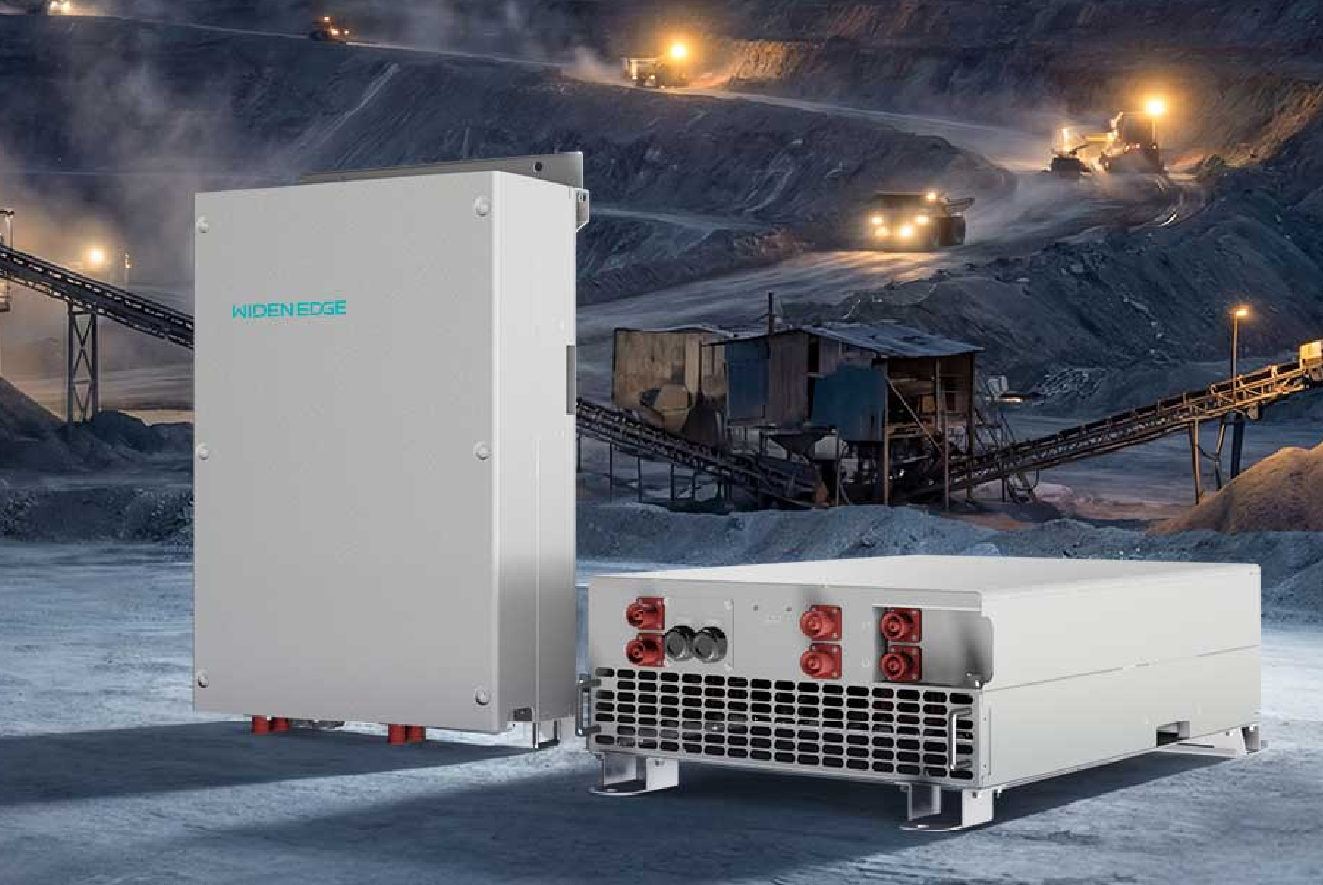
Build in measurable chunks so each step pays for itself.- Containerized battery+inverter modules allow repeatable transport and commissioning. Pick standard footprints to simplify shipping and handling.
– Electrical “hot-swap” racks and standardized AC coupling points let you add racks without outages. Design protection and switchgear for future parallel strings.
– Staggered commissioning: bring modules online one at a time and verify control behavior before the next addition. That prevents complex failures when capacity increases.
Maintenance, logistics and fuel management — the operational side people miss
Scaling is more than equipment; it’s supply chains and habits.- Track fuel use in hourly resolution to see the real benefit of battery dispatch. Use that data to justify additional battery capacity.
– Keep a parts cache: spare inverters, contactors, fuses, and a small battery pack for controller continuity. Remote sites can wait weeks for delivery.
– Train a rotating local technician and create simple runbooks for common faults. Complex systems only work when local crews can perform basic triage.
Common pitfalls that slow scalability
Avoid these repeated mistakes I’ve seen on projects.- Underestimating future load growth; people add telecoms, refrigeration, EV chargers faster than planners expect.
– Treating the battery as a fuel saver only; if you don’t optimize dispatch, savings—and lifecycle—will disappoint.
– Ignoring environmental stressors: salt spray, heat cycles, and humidity shorten equipment life if not addressed.
– Commissioning without stress tests: failure to simulate worst-case islanded operation leads to surprises in a real outage.
Alternatives and trade-offs — reasonable choices to consider
Solar-plus-storage-only setups reduce fuel entirely but need reliable storage and spare capacity for cloudy stretches. Hydrogen and long-duration storage are promising but still niche and costly for many island budgets. Diesel-battery hybrids sit in the middle: lower fuel use, fast response, and staged investment. Choose the path that fits fuel logistics, capital availability, and how much local ops can maintain.
Final synthesis — what to bank on
Working across projects has taught me one clear truth: scale deliberately. Start with modular hardware, clear SoC policies, and a control scheme that separates fast electrical services from slow energy replacement. Watch fuel trends, track field data, and adjust module rollouts to match real demand growth. That steady approach is exactly what leaders at WidenEdge build toward—practical systems that grow without surprise and keep lights on when it matters most.
