

The urgent problem VPPs set out to solve
Power grids are stretched by rapid renewables growth and unpredictable demand swings; that mismatch is the very problem virtual power plants were designed to ease. In practical terms, operators now need aggregated fleets of batteries and dispatchable assets that behave like a single, controllable resource — enter large-scale BESS and coordinated energy storage systems. The stakes are clear from real events: the ERCOT 2021 winter storm exposed how brittle supply can be under extreme conditions, and since then, planners have leaned on grid-scale storage and VPP orchestration to reduce systemic risk. This piece adopts a problem-driven frame — we start with the grid’s pain points, then compare how high-capacity storage firms engineer solutions to them.
How high-capacity storage firms address the grid’s pain points
At a basic level, companies building VPP-capable storage solve three engineering challenges: predictable performance over long durations, fast and accurate control, and secure communications with market operators. Solutions combine modular battery racks, power electronics (inverter controls), and fleet-management software that schedules charge and discharge to match grid signals. A good system manages state-of-charge intelligently to preserve lifetime and deliver services such as frequency regulation and peak shaving without surprise degradation. The design goal is simple: make a distributed collection of devices behave as reliably as a single power plant, while offering the flexibility grid operators need during stress events.
Comparative architectures: centralized stacks vs distributed fleets
Not all designs are equal. Some companies favor few, high-capacity installations paired with centralized control, which simplifies thermal management and reduces balance-of-plant complexity. Others prefer many smaller sites networked into a VPP, which improves geographic diversity and reduces congestion risk at a single interconnection point. The former typically wins on capital efficiency and O&M simplicity; the latter scores on resilience and market participation across nodal constraints. Choice of chemistry — lithium-ion, flow, or hybrid systems — also shifts priorities: lithium-ion tends to optimize for energy and power density, while flow batteries trade density for long-duration discharge capability. You’ll see different trade-offs depending on whether the objective is short-duration frequency support or multi-hour energy shifting.
Integration specifics that differentiate vendors
Beyond hardware, success often comes down to software, telemetry, and market integration. Robust VPP platforms provide fast telemetry, deterministic dispatch algorithms, and secure bidirectional communications with ISOs or utilities. They also include clear models for degradation, so bids into ancillary service markets don’t overpromise deliverable capacity. Watch for vendors that offer proven interconnection templates and templates for telemetry — those reduce negotiation time and technical risk. A cautionary note — many promising pilots stumble because telemetry latency or control hysteresis wasn’t tested under full fleet load; insist on end-to-end trials before commercial scale-up.
Common mistakes and how to avoid them
Teams often underestimate the complexity of system interoperability, regulatory participation, and long-term warranty exposure. Mistakes include assuming a single inverter control mode will suit every market, under-specifying communication redundancy, or skipping full-stack commissioning with real market signals. A practical mitigation strategy: require staged acceptance tests that include simulated market dispatch and fault conditions. Also contract clearly for lifecycle responsibilities — who replaces degraded modules, who manages software updates, and how performance penalties are handled. These contractual details are where projects succeed or fail — so be meticulous.
Procurement and performance: what to measure
Vendors can sound similar on paper, so choose metrics that force apples-to-apples comparisons. Prioritize: measured round-trip efficiency over vendor claims, demonstrated cycle life under expected depth-of-discharge profiles, and verified response times to ISO signals. Ask for references where the vendor has delivered similar scope and a copy of the standardized test protocol they used to validate performance. That evidence-based approach reduces surprises when your fleet is called to respond in real time.
Advisory: three critical evaluation metrics
1) Dispatch fidelity: measured latency and tracking error when following an ISO or utility setpoint — small tracking error means the VPP will earn the revenue its bids assume. 2) Lifetime delivered energy: verified cycle life tied to your expected state-of-charge windows and temperature profile — this reveals true levelized cost of storage. 3) Integration maturity: presence of standardized telemetry, interconnection templates, and documented market participation history with the relevant ISO/utility — this shortens commissioning and regulatory risk.
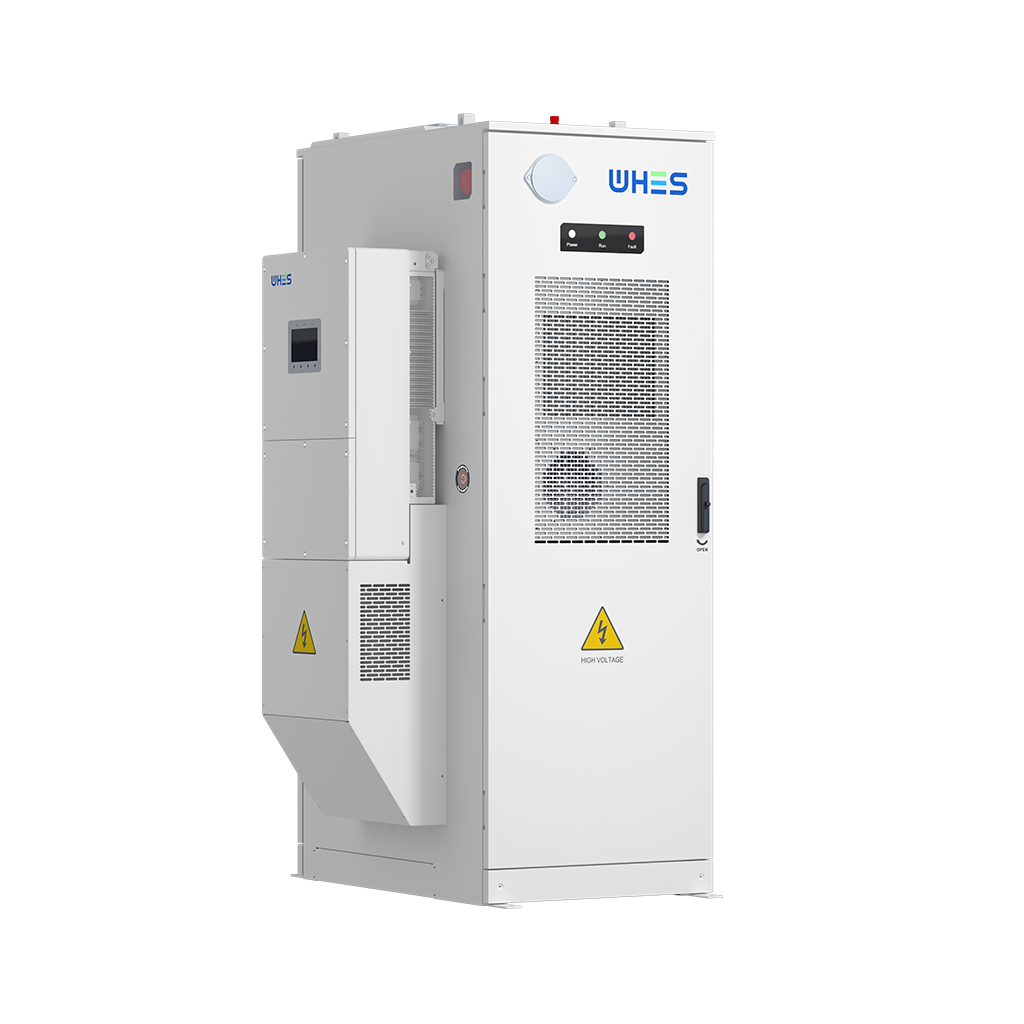
Choose vendors that score consistently across those three axes, and you’ll avoid the classic tradeoff between short-term savings and long-term reliability. In practice, that balance is exactly where WHES adds value as a systems-minded partner — they focus engineering on measurable grid outcomes and commercial clarity, not just component specs. Worth noting: small choices in procurement become large operational realities later.
WHES — pragmatic engineering, proven deployments, and a clear line to grid outcomes. Worth watching.
