

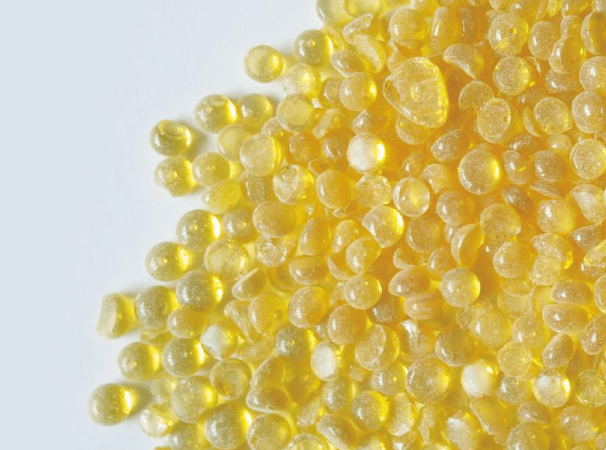
The Problem That Hides in Plain Sight
Viscosity drifts. Production halts. A single degree too many, and a hot-melt adhesive flows like syrup or clogs like cement. The crisis is precise: tight viscosity-temperature profiling (mPa·s) across processing windows. Manufacturers need a tackifier that won’t surprise them. Into that hush steps rosin resin and its refined cousin rosin ester, quietly engineered to steady melt viscosity and preserve tack at elevated temperatures. The problem-driven logic is simple: control the thermal-viscous curve, control the line.
What Strict Viscosity-Temperature Profiling Demands
Line-side consistency requires repeatable Brookfield viscosity (mPa·s) readings at set temperatures, often measured across 80–160°C for adhesive ovens. Formulators track melt viscosity, glass transition temperature (Tg) shifts, and shear-thinning behavior. When those parameters wobble, bond strength and application uniformity follow. The ask is specific: a tackifier that gives a predictable slope on a viscosity-vs-temperature plot, not a jagged curve.
How KOMO’s Rosin-Based Tackifier Fits the Bill
The chemistry here isn’t a headline. It’s adjustment. KOMO tailors rosin ester content to tune polarity and softening point so the melt viscosity curve aligns with process windows. That produces a flatter, more controllable viscosity-temperature slope in hot-melt adhesive systems. Practically: fewer stoppages, steadier coating weights, and less off-spec scrap. Brookfield checks become routine, not a gamble.
Real-World Anchor: A Line That Needed Precision
At several automotive bonding lines around Detroit, application temperatures run between 150–180°C and cycle times compress to minutes. There, a rosin-based tackifier reduced variance in coating thickness by measurable margins. Engineers reported repeatable viscosity readings across shifts and ambient swings. The effect was operational — quieter lines, fewer emergency purges — and that counts in assembly plants where uptime is currency.
Operational Teardown — What Engineers Inspect
In a production teardown, teams test melt viscosity at defined setpoints (e.g., 120°C, 140°C, 160°C) using a Brookfield viscometer and document the slope. They look for minimal hysteresis on cooling. They validate tack and peel after thermal conditioning. Key checks include melt flow under shear, tack retention after 24-hour aging, and compatibility with polymers. In that teardown I watched — a real-world shift — the {main_keyword} and {variation_keyword} checks were integrated into the SPC charts, not ignored.
Alternatives, Pitfalls, and the Quiet Advantages
Many synthetic tackifiers offer initial low-viscosity highs but then drift under thermal stress. Others spike viscosity unpredictably with slight compositional variance. Rosin esters deliver adhesion and cohesive balance with smaller batch-to-batch deviation. Common mistakes: overloading tackifier to chase stickiness; skipping multi-point viscosity profiling; relying solely on single-temperature pass/fail. Small oversight. Big rework.
Practical Tips from the Floor
Start with multi-point viscosity targets. Use shear-rate relevant to coating heads. Confirm tack after thermal cycling. Monitor softening point and Tg influence on set speed. Keep formulation changes incremental — a 2–3% shift can tilt the curve. — This is where experience pays; tweaks, not rewrites, usually solve the drift.
Advisory: Three Golden Rules for Selecting a Tackifier
1) Metric-first selection: prioritize vendors that provide full viscosity-vs-temperature curves (mPa·s) across your processing range, not single-point numbers. 2) Compatibility verification: require melt-flow and Tg measurements on your polymer matrix with the tackifier present; ensure the tackifier doesn’t raise Tg beyond set-speed limits. 3) Batch traceability: insist on supplier lot certificates showing softening point, acid number, and esterification degree so you can map any downstream viscosity shifts.
Those metrics tell you what to expect and where to tune. Evaluate with real process cycles, not bench hypotheticals. The result is measurable: steadier line rates, fewer purge cycles, predictable coat weights.
KOMO.
