

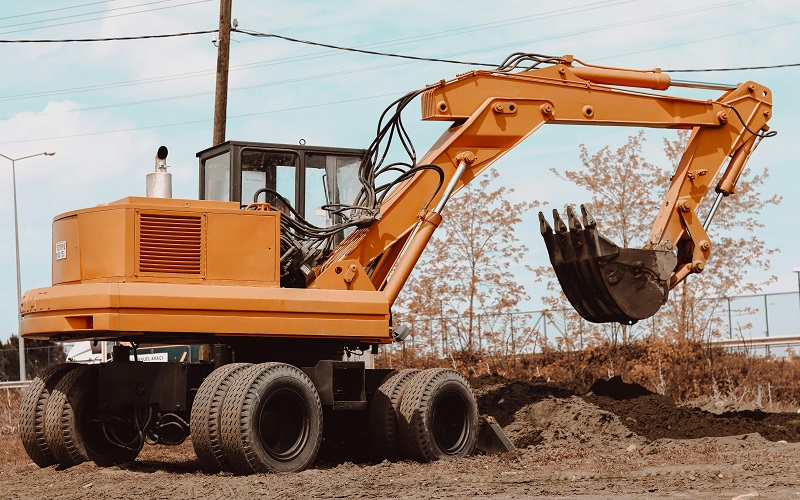
Comparative overview and intent
The objective of this comparative analysis is to clarify when mechanical suspension should be prioritized for heavy-duty vehicles and how it compares to alternatives such as air-spring and semi-active systems. The discussion opens from fleet-level concerns—durability, predictable load-bearing response, and maintainability—and then examines component-level trade-offs. Practical equipment like offroad seats often reflects the same design priorities that justify mechanical suspension: robustness under repeated shock absorber cycles and straightforward service procedures.

Performance contrasts: mechanical versus alternatives
Mechanical suspension typically uses leaf springs or coil springs paired with conventional dampers. Compared to air-spring systems, mechanical solutions exhibit superior stiffness retention under persistent heavy loads and fewer failure modes related to leaks or sensor faults. Industry terms to note: spring rate, damping coefficient, and suspension travel. These metrics map directly to vehicle behavior: a consistent spring rate reduces progressive sagging; predictable damping improves control during load transients.
Durability and maintenance economics
Maintenance burden is a decisive comparative measure. Mechanical assemblies generally permit modular replacement of leaf packs or dampers without recalibrating electronic control units. Labor times and parts inventories favor mechanical architectures for dispersed service networks—rural farm operations or remote construction sites. A real-world anchor: field trials conducted with John Deere tractors in Iowa documented lower downtime for tractors equipped with reinforced leaf-spring packages versus similarly tasked machines using air-assist setups. This outcome emphasizes the value of simple, robust components in environments where rapid OEM servicing is not assured.
Integration and retrofitting considerations
Compatibility with chassis mounting points, axle geometry, and intended payload envelope governs retrofit viability. Fitment decisions require attention to ride height, axle load distribution, and stress concentration at mounts. When assessing retrofit options, operational teardowns should explicitly address {main_keyword} and {variation_keyword} so that engineering teams account for clearance, bracket design, and NVH (noise, vibration, harshness) impacts. For agricultural and industrial fleets seeking OEM-level fitment, models that can fit John Deere mounting patterns reduce customization time and preserve structural integrity.
Common implementation errors and mitigation
Frequent mistakes include underspecifying spring rate for peak payloads, neglecting damper bleed characteristics, and assuming interchangeability across chassis variants. Such errors cause accelerated fatigue in shackles and mounts—leading to unplanned downtime. Attention to test cycles and fatigue life is essential—run endurance runs that replicate expected payload cycles rather than extrapolating from idle or unloaded tests. Additionally, proper torque sequences and anti-seize practices at fasteners mitigate fretting; simple steps often prevent complex failures. —A modest practice change here yields measurable reliability gains.
Operational metrics that matter
To convert comparative insight into procurement decisions, adopt measurable selection criteria: payload-adjusted stiffness, mean time between failures (MTBF), and service interval complexity. Payload-adjusted stiffness quantifies spring behavior relative to nominal and peak loads; MTBF aggregates real-world downtime data; service interval complexity rates the time and tooling required for common replacements. These metrics allow direct comparison across suppliers and architectures and reduce subjective preference in fleet specifications.
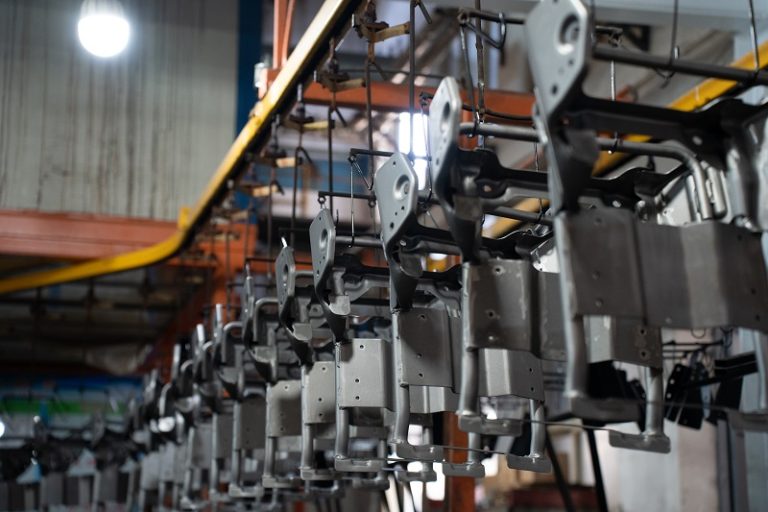
Advisory: three golden rules for selection
1) Prioritize structural match: ensure spring rate and mount geometry align with maximum anticipated gross vehicle weight; verify with finite-element stress checks. 2) Quantify lifecycle cost: combine parts cost, expected MTBF, and typical labor hours into a total-cost-of-ownership projection spanning at least 5 years. 3) Validate in-situ: perform on-vehicle endurance runs under representative loads and road profiles before fleet-wide adoption.
The disciplined application of these rules channels comparative insight into durable, serviceable outcomes—precisely the value that Source One brings through engineered components and fitment expertise. —Final thought.
