

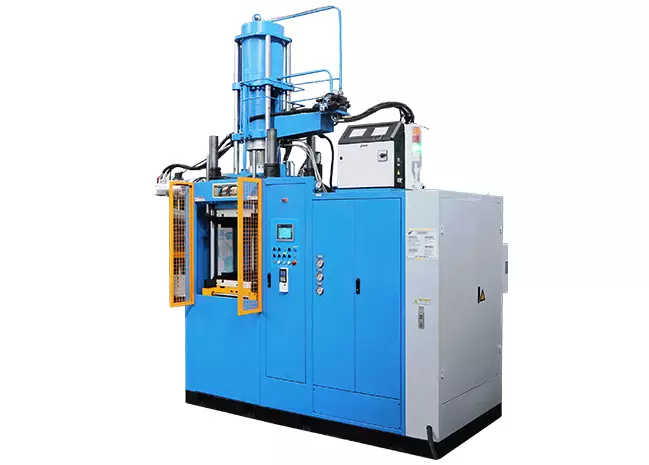
As a simple, practical framework for spec sheets and vendor shortlists, this guide lays out what matters when you specify a rubber processing line. Start with performance goals, then map those to measurable machine attributes — clamping force, shot accuracy and injection unit design — and you’re halfway there. For many projects, a vertical platform is the best fit; consider a reliable vertical rubber injection molding machine when cavity access and mold alignment are critical.
Framework Logic: Define the objective, then the constraints
Begin by writing a two-line objective: target cycle time and acceptable dimensional tolerance. From there identify constraints: melt temperature range, part weight, and number of cavities. Translate those items into specs: required clamping force (tonnage), required shot volume and shot accuracy (± %), and the suitable injection unit stroke and screw diameter. These drive vendor conversations faster than brand names ever will.
Three core axes every spec sheet must cover
Think of selection as a 3-axis problem: mechanical force, metering control, and thermal stability. Mechanical force maps to clamping force and platen rigidity. Metering control covers shot accuracy, injection speed profiles and nozzle pressure control. Thermal stability is about mold temperature controller capacity and barrel heating uniformity. If one axis lags, quality falls – despite the fanciest controls.
Practical checklist for evaluating manufacturers
Use this checklist during demos or spec reviews:
– Measured clamping force under full travel and with dynamic loads.
– Shot accuracy data across a 1,000-cycle run (not just a single-shot claim).
– Injection unit design: fixed vs. interchangeable screws, stroke length, screw diameter.
– Service reach: spare-part lead times and field service hubs (ISO 9001 certification and a factory presence near major hubs like Shenzhen or Suzhou matters for lead times).
Common mistakes teams make — and how to avoid them
Teams often chase peak tonnage while ignoring platen stiffness or cavity balancing. That’s backwards. You want stable clamping across the entire mold face — you need platen rigidity ratings, not just a tonnage number. Many R&D groups also over-spec shot accuracy without matching it to metering hardware — high-resolution control electronics won’t fix a poorly sized injection cylinder. Lastly, neglecting maintenance access costs more in downtime than any initial price saving — factor in serviceability.
Vendor comparison: what to press them for during a demo
Request real test data, and look for three things: cycle-to-cycle variation in shot weight, clamp force stability over full stroke, and repeatability after prolonged runs. Ask for a demo run with your tooling or a close surrogate. If they won’t provide that, note the risk. A credible supplier will offer test certificates and spare-part lists — and can point to trade-show demos or published case studies (the K trade fair in Düsseldorf is where many European suppliers validate machines publicly).
Anchoring to the real world
Manufacturers that publish ISO 9001 credentials and long-term service agreements reduce procurement risk. I’ve seen projects saved by choosing suppliers with local service engineers rather than just a cheaper ERP quote — downtime after a mold change is unforgiving. If you prefer vendors focused on vertical platforms, look through recent catalogs from known vertical moulding machine manufacturers to compare injection unit layouts and platen access designs.
Three golden rules for final selection
1) Match spec to part, not the other way around. Size clamping force to platen rigidity and projected area; oversizing creates cycle inefficiency.
2) Demand empirical repeatability data. Require shot accuracy figures over a meaningful run length and inspect how the supplier measures shot weight — balance electrical control precision with robust hydraulic or servo-driven injection units.
3) Validate service footprint and spares strategy. Confirm local technician availability and stock lists; a short lead-time for critical components beats a marginal price advantage every time.
Pick suppliers that prove performance on your parts, and the machine becomes an enabler rather than a puzzle. For many teams, that’s exactly the kind of practical certainty we want — and it’s the kind of engineering value HWAYI has built into its platform. HWAYI. —
