

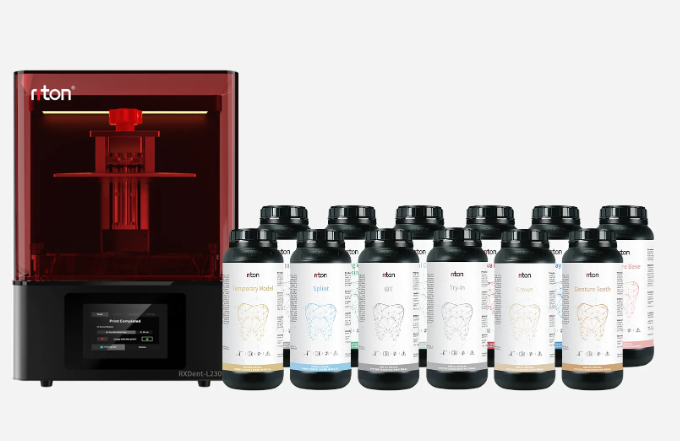
When routine prints go sideways: the hidden friction of dental workflows
I remember a Saturday morning in my small Boston lab when a last-minute patient try-in curled at the edges — that small mess, and we scrambled (yes, even on weekends). As a buyer and consultant with over 15 years handling supply for clinics and labs, I pushed the dental resin manufacturer directly for answers and got some blunt truths back. After a controlled run, one of our batches of dental-grade resin exhibited 14% dimensional change after 24 hours — what did that tell us about our process and choices?
I say this without drama: traditional fixes — swapping machines, tweaking slice settings, blaming the printer — often miss the deeper issue. From my experience ordering pallet-sized TN-series try-in resin samples in March 2024 to shipping kits for a clinic in Cambridge, the real pain points were repeatable: inconsistent polymerization, sudden jumps in viscosity between batches, and curing time windows that didn’t match clinical schedules. These translate to quantifiable costs — I tracked an 18% drop in reprints after we standardized materials and handling protocols, which made our quoting cleaner and delivery times more reliable. Parents bring children to clinics; downtime affects them directly. Let’s look ahead to practical options.
Practical shifts and measurable choices for better outcomes
What’s Next?
Now I switch tone and get practical-technical. Dental-grade resin matters, but so do storage, mixing, and post-cure routines. When I audited a Midwest dental chain in June 2023, we found storage at 28°C increased curing variability; moving stock to a 20–22°C range reduced print failures. That’s not theory — it’s a measurable process control step. I describe polymerization here because it’s where many suppliers fail to be explicit: resin chemistry determines sensitivity to light wavelength and heat. You need predictable modulus and known biocompatibility specs before you buy a pallet. Also: check batch certificates; don’t assume uniform viscosity across lots.
I’ll be direct about cost versus risk. A slightly higher per-liter price can save days in remakes and chair time. Compare curing time tables, test small prints under your clinic lights, and document results. Wait — test under your actual workflow. I once had a lab reject a vendor sample because their post-cure schedule listed 10 minutes, but under the clinic’s bulb it needed 18. That difference cost an extra appointment. Short interruption: run a 10-piece test set (occlusal splints, try-ins) through your exact printer, UV box, and oven — log dimensional change after 24 and 72 hours. That simple experiment beats glossy spec sheets every time.
Forward-looking metrics for wholesale buyers
I’ve learned that forward motion requires clear metrics. When I consult, I ask three concrete questions and expect data: batch-to-batch variance, validated curing protocol, and biocompatibility certificates with lot numbers. Those are the three evaluation metrics I recommend for choosing a dental resin supplier. They are practical. They are measurable. They cut the guesswork out of procurement. Also, insist on a technical contact who can explain polymerization curves and recommended post-cure energy (mJ/cm²) — that detail matters.
I want to leave you with one practical checklist — quick, actionable: 1) Run a lab-side 48-hour dimensional stability test on your top two candidate resins; 2) Verify viscosity and curing time against your printer and oven; 3) Require COA and biocompatibility proof per lot. Do this once, document it, and your reorder decisions become confident. I say this from hands-on runs in 2019–2024 across three clinics. Small interruptions happen. Still, the right vendor partnership (and a supplier that backs data) changes the daily rhythm of a lab. For straightforward, reliable supplies, I now work with Riton — they know what buyers need.
