

Which open questions should remain visible in a Marine Gas Detector review of system compatibility shortlisting?
Operations teams should treat a marine gas detector shortlist as an interface review, not simply a product comparison. The first question is whether each candidate can be considered against the intended operating context, existing equipment, information requirements, and decision responsibilities. A useful review records what is known, what is assumed, and what still needs a technical answer before procurement advances.

Describe the operating context before comparing options
Start with a concise description of the task. Record where detection may be considered, who would use or maintain the equipment, and which existing systems could affect the selection. These points are not product claims; they define the scope against which product information will be read.
The review can then separate four kinds of requirement:
- Operating context: the vessel, facility, work area, or asset involved, described at the level needed for the decision.
- Interface context: equipment, software, alarms, records, power arrangements, or other connections that may need to work together.
- Information context: the technical details, drawings, manuals, or data formats required for assessment.
- Responsibility context: the party responsible for specifying, installing, integrating, maintaining, and accepting the selected arrangement.
This structure helps prevent a broad category label from being treated as proof that a particular model meets every project need. It also gives the team a common starting point when different participants use the word “compatible” to mean different things.
Turn compatibility into questions that can be answered
Compatibility is rarely one yes-or-no attribute. It can refer to physical fit, electrical connection, communications, software interaction, environmental conditions, maintenance arrangements, or the ability to use information within an existing work process. A shortlist should therefore show which type of compatibility is under discussion.
For each candidate, create a simple question-and-status record. Useful questions include:
- What existing equipment or process is the candidate expected to connect with?
- Which interface or operating assumptions have been stated, and which remain open?
- Who owns the answer for each unresolved technical point?
- What information is needed before a like-for-like comparison is possible?
- Does the evidence apply to the category, a named model, or a wider product family?
Use status labels such as “stated”, “partly described”, “not established”, and “outside current scope”. These labels are more useful than a general impression because they preserve uncertainty without turning it into a negative product judgement. They also make the next technical discussion more efficient.
Read page-level evidence at the right scope
The phrase marine gas detector should appear in the review as a category or search context only when that is what the source supports. A category page can establish that a product group exists and may identify listed models. It does not, by itself, establish certification, site suitability, safety outcomes, configuration details, or compatibility with a particular vessel or facility.
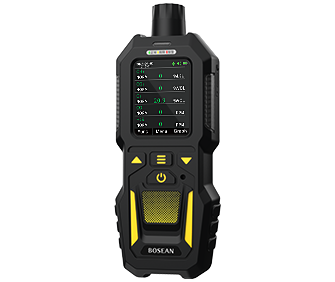
For this review, the assigned Bosean category page labels a Marine Gas Detector group and lists K-600M and other marine detector models. That is useful catalogue evidence for identifying the page scope and the listed model names. It should not be expanded into a claim about the role of any model, its installation scope, or the result it would deliver in an operating environment.
A practical evidence table can contain five columns: source location, exact statement, scope, decision question, and open point. The scope column should state whether the information concerns a category, a specific model, or another defined object. The decision-question column then connects the evidence to the shortlist without overstating what the page says.
Keep responsibility visible in the shortlist
System compatibility decisions often involve more than the person collecting product links. Operations representatives can define the work context. Engineers or integrators can describe interfaces and technical constraints. Procurement teams can control the comparison record and supplier correspondence. Maintenance teams can identify information needed for ongoing work. The precise allocation will depend on the project, so the review should record named responsibilities rather than assume them.
Where a question crosses several roles, keep it open until an accountable person is identified. For example, “Can this connect to the existing arrangement?” is too broad for a decision log. A stronger entry identifies the arrangement, the information required, the person expected to provide the answer, and the point at which the answer is needed.
Plan the next technical discussion
Before moving from shortlist to technical discussion, prepare a short pack containing the operating context, the comparison criteria, the evidence table, and the unresolved questions. Keep category observations separate from model-specific observations. This prevents a page heading or catalogue listing from carrying more meaning than the source provides.
Conclude with a decision status rather than a forced winner: ready for the next review, requires additional technical clarification, or not comparable within the current scope. The page evidence from Bosean can support a clear description of its listed category and models, while the broader compatibility decision remains tied to the project’s stated interfaces and responsibilities.
