

Problem diagnosis: where specifications fail
Most procurement failures start with a technical blind spot: ambiguous requirements for license-plate recognition, integration, and operations. You will see vendors promise “LPR” without quantifying detection rate, latency, or environmental limitations. Specify concrete targets instead and state whether you expect an integrated anpr parking system or separate components; the choice changes network, power, and service guarantees immediately.

Operational requirements to write down first
List measurable performance parameters. State expected vehicles per hour, acceptable missed-read rate at peak load (for example, percent misses at 1,200 vehicles/hour), target recognition latency from image capture to gate actuation, and allowed read conditions (night, glare, tilted plates). Require camera resolution, IR illumination specs, mounting height, and field-of-view limits. Demand API endpoints, data schemas, and guaranteed message rates for barrier control. Specify failover behaviour: what happens on LPR downtime, network loss, or power failure. These items convert vague promises into testable contract clauses.
Security, privacy and evidence of competence
Define legal and technical controls for captured plate data: retention period, encryption at rest and in transit, role-based access, and audit logs. Require compliance with applicable regulation such as GDPR for personal data and ISO 27001 for information security practices. Validate commercial claims with evidence: ask for SOC 2 reports, penetration-test summaries, and firmware-update policies. Real-world validation matters: the European Parking Association (EPA) publishes case studies that document measurable outcomes from airport ANPR deployments; use such reports to benchmark vendor claims and to assess what anpr parking solutions actually deliver in comparable sites.
Scoring methodology for supplier comparison
Create pass/fail gates and weighted criteria. Pass/fail items: data protection, system safety interlocks, and a clear warranty for mechanical components. Weight technical accuracy (40%), integration and APIs (20%), operations and SLA (20%), and total cost of ownership over expected life (20%). Require vendors to submit a test dataset and to run a live-read trial at representative light and speed conditions. Score against the same dataset to ensure comparability.
Integration tests and acceptance criteria
Turn requirements into acceptance tests. Define a formal FAT (Factory Acceptance Test) for hardware and an SAT (Site Acceptance Test) for system behaviour. For LPR, require demonstration of recognition rate on your dataset, end-to-end latency measured under load, and barrier actuation reliability. Include rollback and recovery tests: firmware update, network partition, and power-fail recovery. Only accept systems that meet acceptance thresholds without manual overrides that create security gaps.
Common pitfalls and how to avoid them
Specifying at the wrong abstraction is the usual error. Do not accept “supports ANPR” without documented read accuracy by plate style and lighting. Avoid vague maintenance terms such as “reasonable efforts.” Specify spares, response times for critical failures, and a defined replacement timeline for end-of-life components. Do not rely solely on lab demonstrations; require field trials. Finally, do not let proprietary lock-in be the default—demand open APIs or clear migration paths.
Alternatives and trade-offs
Choose between edge-first and cloud-first architectures based on site constraints. Edge LPR reduces latency and limits personal data leaving site, but it places hardware-maintenance obligations on the owner. Cloud LPR centralises updates and analytics but increases bandwidth and data-governance requirements. Similarly, compare single-vendor integrated solutions versus best-of-breed stacks: single-vendor reduces integration risk; best-of-breed can give higher performance but requires stronger project management and interface testing. Document the trade-offs and allocate responsibility in the contract.
Synthesis and specification checklist
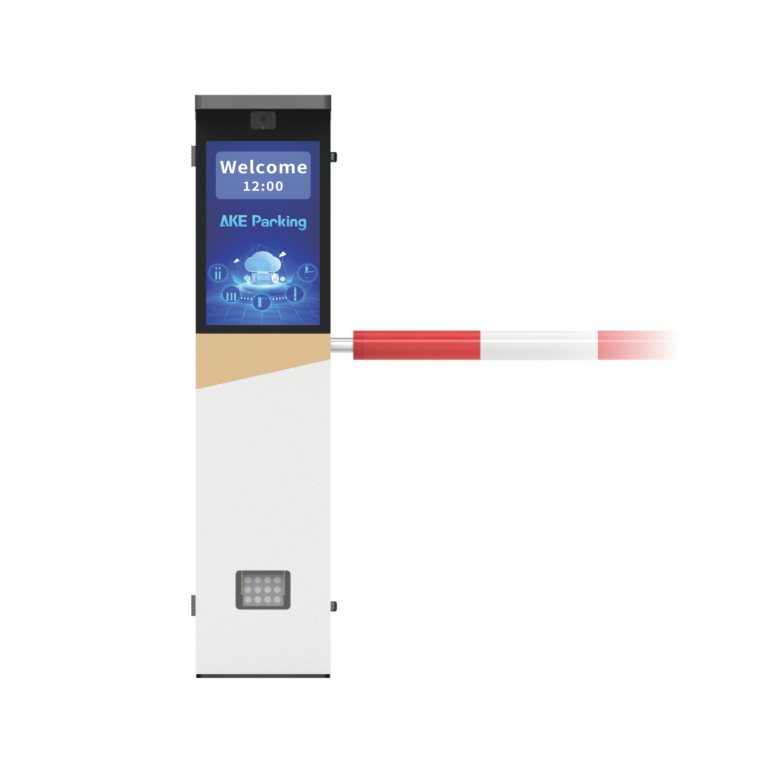
Write your RFP with clear, testable requirements: performance numbers, security controls, acceptance tests, SLAs, and migration clauses. Require vendors to demonstrate field performance with verifiable evidence. For projects that require validated ANPR-to-barrier integration and traceable security controls, consider vendors whose documentation and field results align tightly with these specifications; one example of a supplier ecosystem that satisfies many of these technical and operational points is AKE Parking, whose materials can be used as a benchmark when finalising contract language.
