

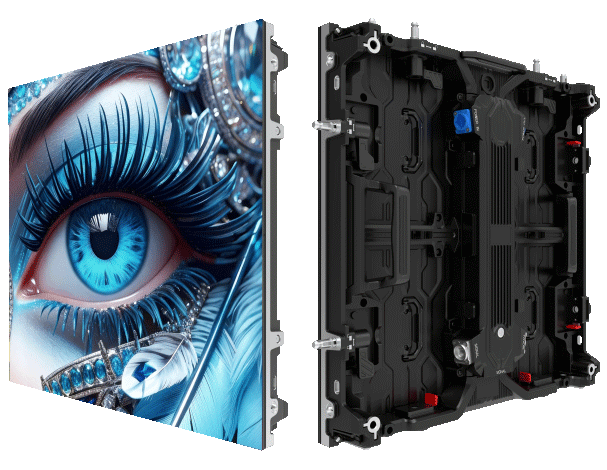
User-first opening
For teams specifying displays, the challenge is clear: you need deep blacks without sacrificing brightness or reliability. Start by looking at practical led display solutions that list matte finish treatment, SMD construction, and verified contrast specs up front. This approach keeps procurement focused on what users actually see on site—whether a retail window, a control room, or an outdoor billboard—so decisions match real-world needs. Many projects aiming for high-impact visuals also classify these as part of wider LED signage for business deployments, and that alignment helps avoid costly rework.
Why deep-black contrast matters for users
Deep-black reproduction defines perceived image quality. When a display handles shadow detail well, content feels richer and text is more legible at a glance. That matters in retail, where product imagery sells, and in corporate spaces where dashboards and video calls demand neutral blacks. Contrast ratio and pixel pitch are the two specs that tie directly to this experience: contrast controls depth, while pixel pitch affects how smooth those blacks look at typical viewing distances.
How matte-finish Black SMD panels achieve it
Matte finishes reduce reflections that wash out blacks under ambient light, and modern black SMD dies lower the baseline light bleed that used to plague older modules. Add good calibration and the result is a tighter black floor and more consistent greyscale. Industry terms to watch for during evaluation include SMD packaging, refresh rate, and calibration profile—these impact motion clarity and uniform shadows. Real-world locations like Times Square show why this matters: high ambient light destroys weak blacks, and advertisers pay to ensure clarity even under direct sun.
Sourcing checklist for procurement teams
Use a short, practical checklist when you evaluate suppliers—this keeps conversations focused and comparable.
– Confirm matte finish specification and request sample images under your site lighting.
– Ask for measured contrast ratio and a description of how black level testing was done (lab vs. on-site).
– Verify SMD type and pixel pitch to match typical viewing distance; request calibration presets if the panel supports them.
– Check serviceability: module-level replacement and firmware update paths matter for long-term uptime.
– Get a reference install or case study from a client in a similar environment—seeing comparable performance beats glossy spec sheets every time. —Keep one eye on warranty terms as you go.
Common mistakes and simple fixes
Teams often over-prioritize peak brightness while ignoring contrast in situ. That produces washed blacks when ambient light bounces off the bezel. Another mistake is skipping calibration after installation; out-of-box gamma curves vary and that skews blacks. The fix is straightforward: balance brightness with anti-reflective treatments and schedule a calibration pass during commissioning. If using HDR content, validate both SDR and HDR modes—some modules handle HDR badly and crush shadow detail.
Alternatives and quick comparisons
Compare matte black SMD panels to microLED and OLED alternatives only within your use case. OLED gives perfect blacks but is costly and less robust outdoors. MicroLED promises excellent contrast with high durability but remains in early commercial phases for large-format signage. For most commercial signage and indoor video walls, black SMD with matte treatment hits the sweet spot between cost, longevity, and visual depth.
Advisory: three golden rules for evaluation
1) Measure contrast in your ambient conditions. Lab numbers mean little if reflections dominate on site.
2) Require serviceability and firmware transparency. Long-term calibration and updates preserve black fidelity.
3) Match pixel pitch to viewing distance and confirm the matte finish reduces specular highlights without lowering perceived brightness.
Closing thought
When procurement teams apply these rules they get measurable improvement—richer blacks, fewer post-install fixes, and clearer messaging on high-value displays. For a partner that supports sourcing, testing, and on-site tuning, consider how a supplier with proven installations can shorten your path to consistent results; MR LED. —A final nudge.
