

Introduction — Who’s actually reading the spec sheet?
Have you ever bought a motor because the label looked right and then watched it underperform on the line? (I’ve been there.) Electrical Motor Products are marketed with metrics and hot claims—industry reports show up to 30% mismatch between claimed and operational efficiency in some deployments—so how do we separate marketing from reality?
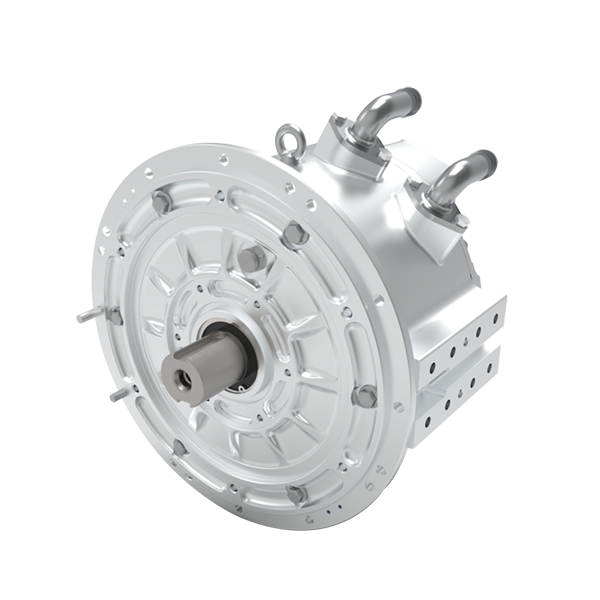
I want to set a straight course: we’ll look at common assumptions, back them with data, and ask the hard questions you probably didn’t get in the vendor demo. This is practical, technical guidance — yet conversational. Ready to dig in? Let’s move on to the real flaws hiding behind polished spec sheets.
Part 1 — Why standard fixes fail: common flaws in electric motor solutions
When teams try quick patches, they often reach for off-the-shelf fixes without testing system-level impact. I link you directly to electric motor solutions because it helps to anchor the conversation in real product lines, not just theory. The main issue I see: people treat the motor as an isolated part instead of a node in a network of power converters, sensors, and controllers.
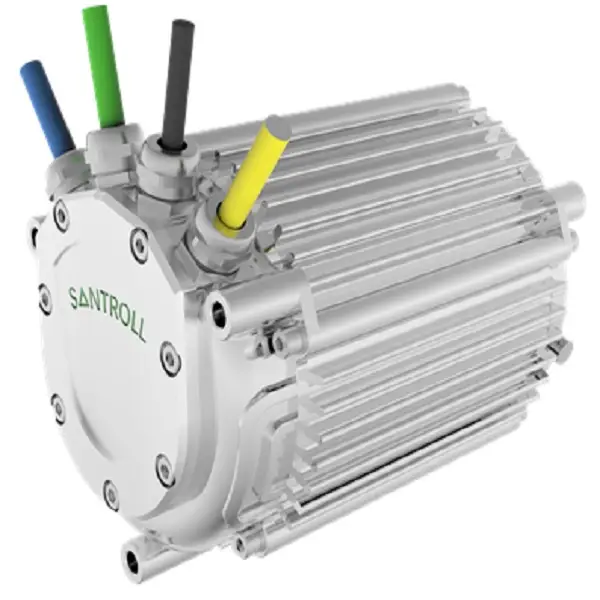
Technically, the fault lines are predictable. For example, matching a motor to a mismatched inverter or ignoring PWM harmonics can cause overheating, torque ripple, or encoder feedback errors. I’ve also watched teams over-spec the motor to “play it safe,” which leads to wasted energy and higher upfront cost. Look, it’s simpler than you think: right-sizing and control strategy matter more than raw horsepower numbers.
What specifically goes wrong?
Broken down: (1) poor integration — cable routing and grounding ignored; (2) control mismatch — PID or torque control tuning left to default; (3) sensing gaps — encoder resolution or current sensing insufficient. These aren’t mystical problems. They are avoidable with the right checklist and, yes, some modest testing before full deployment.
I’ll be frank: vendors rarely volunteer the messy trade-offs. So if you ask me, insist on seeing dynamic tests under representative loads. You’ll learn more from a short ramp test than from a glossy data sheet. — funny how that works, right?
Part 2 — Looking forward: case outlook and how new thinking reshapes choices
We should move away from one-off fixes toward systems thinking. In the next three to five years, I expect more designs to prioritize smart feedback loops and adaptive control. A practical example: replacing legacy closed-loop drives with modern servo drives that offer onboard diagnostics. This reduces downtime and lets teams tune torque control in the field — which is a game-changer for variable load applications.
Consider a case where a mid-size plant swapped older induction motors for brushless DC types coupled to modern motor control products. They cut energy use and reduced maintenance cycles. The key principle is simple: integrate sensors and controllers so the motor isn’t guessing at what the system needs. This means better life-cycle cost, not just lower published watts.
Real-world impact — what to expect
I’ve helped oversee a migration like this and the measures that mattered were not exotic. Encoder quality, thermal margins, and control loop bandwidth. We tracked mean time between failures and efficiency across seasons. Results? More predictable performance and fewer emergency stops. Short sentence: it made work less stressful.
Also, consider the role of edge gateways and predictive diagnostics — they let you see a failing bearing long before it trips the line. That visibility costs something, but the payoff is measurable in reduced scrap and overtime. — I swear the math adds up.
Conclusion — How to evaluate and choose confidently
I’d wrap this up with three practical metrics I use when evaluating solutions. These are not vanity numbers; they reveal real operational quality:
1) Integrated diagnostics coverage — how many failure modes are visible on startup and during runtime? 2) Control granularity — can the drive and motor handle fine torque control without resorting to brute force? 3) System-level efficiency under real load — not just a rated number at a single point.
Use these as filters when you compare vendors and system architectures. I recommend running short scoped trials where possible. They cost less than a bad procurement decision and teach you faster than meetings do.
We’ve covered why the old patches fail, what to change, and how to measure success. I feel strongly that this is the pragmatic path forward: demand integration, insist on diagnostics, and evaluate under real conditions. If you want a practical partner or product reference, check out Santroll. I’ll be around to help you interpret the results when you run those first tests.
