

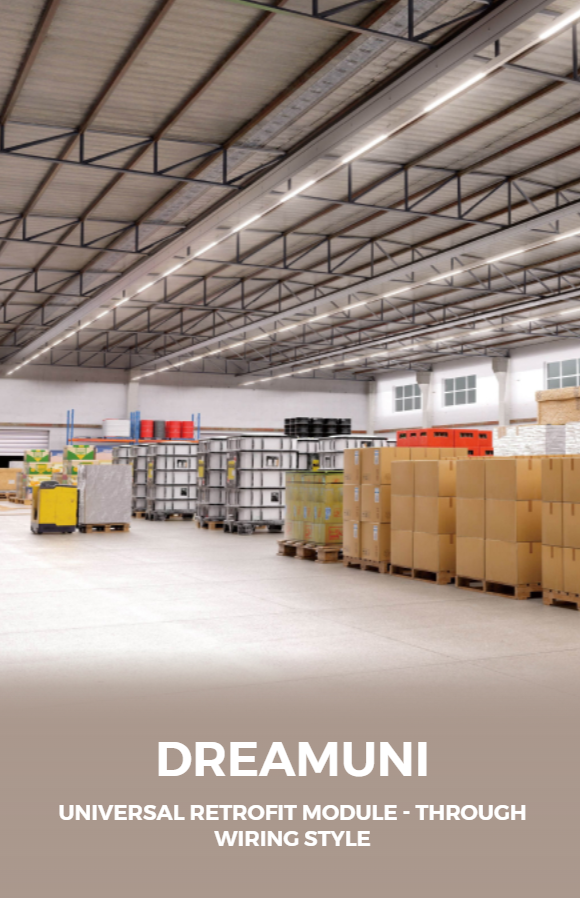
Analytical summary
Warehouses and production areas need repeatable, measurable lighting outcomes. I evaluate performance by three numbers: maintained illuminance (lux), visual comfort (UGR/uniformity), and energy delivered per lumen (lm/W). For practical comparisons, look at installation-level metrics rather than brand claims. Practical deployments often use industrial solutions; preview product ranges at industrial lighting and consider how a track panel light fits into your lumen and layout targets. My analysis is grounded in field audits and manufacturer test reports, and observations from Light + Building in Frankfurt provide a real-world reference point for how track panel designs are trending globally.
Problem statement: what breaks measured performance
Poorly specified fixtures create five measurable failures: low maintained lux, high non-uniformity, unacceptable color rendering, energy waste, and visual discomfort. Typical failure patterns I see:• Maintained lux drops below task thresholds (200–500 lx) within 6–18 months due to dirt and lumen depreciation.• Uniformity ratio (min/avg) falls under 0.4 in racked aisles, causing scanning and picking errors.• CRI under 80 gives misleading color for quality inspection.• Fixtures listed at 140 lm/W actually deliver 22) increases eye strain on repetitive tasks.Address these through measured baseline data and by choosing fixtures that meet installation-tested metrics, not just catalog numbers.
Key metrics to quantify before you buy
Make a short test protocol and collect:• Target lux per zone: storage 100–200 lx, general production 300–750 lx, inspection 750+ lx.• Uniformity ratio: aim ≥0.6 for aisles, ≥0.4 for large storage zones.• Delivered efficacy: require measured system efficacy ≥100 lm/W after luminaire and driver losses.• CRI and TM-30: set CRI ≥80; consider TM-30 for critical color tasks.• Flicker and stroboscopic risk: measure percent flicker and SVM for conveyor tasks.Use these numbers to score candidate fixtures and produce a simple cost-per-maintained-lumen metric for decisions.
Why track panel light often wins operationally
Track panel light combines directional control with serviceability, and it scores in these dimensions:• Aimability: targeted beams reduce spill and raise aisle lux by 20–40% compared with fixed highbays.• Maintenance: modular drivers and replaceable modules keep maintained light higher over five years.• Thermal performance: flat-panel form-factors dissipate heat across a larger surface area, improving lumen maintenance.• Integration: easy to augment with occupancy and daylight sensors for demand-driven control.When you quantify benefit as “cost per maintained lux,” track panels frequently outcompete legacy HID retrofits and even some LED highbays, especially in mixed-use production zones.
Practical evaluation checklist for track panel light
Score each candidate on:• Measured delivered lumens at mounting height.• Lumen maintenance projection (L70 at 50,000 hours).• Thermal testing or Tcase values.• Driver efficiency and dimming range (1–100% recommended).• Polar intensity distribution for your aisle geometry.• Warranty terms tied to luminous maintenance, not just years.A simple scoring matrix (performance, durability, energy, installation) reveals trade-offs quickly.
Common installation mistakes and how metrics prevent them
Installers often underspec tilt, ignore luminaire spacing, or rely on nominal lumen output. Avoid these traps:• Don’t assume catalog lumens = installed lumens; model using photometric files and verify with a lux meter.• Don’t group sensors without testing coverage; false positives raise energy use.• Don’t accept poor glare ratings; verify UGR or measure discomfort at workstation heights.A short validation scan at commissioning (10–20 points per 1,000 m²) prevents rework and ensures promised savings are real.
Alternatives and trade-offs
Compare three practical paths:• Replace like-for-like with LED highbays: lower capex, modest operational gains.• Retrofit with linear fixtures: good for long aisles but less flexible for mixed tasks.• Deploy track panel light: higher upfront planning, faster payback in varied-task zones due to targeted lighting and lower maintenance costs.Quantify payback as years = incremental capex / annual maintained-lumen savings to choose the right path.
Decision thresholds and quick rules for procurement
Use these actionable rules:• If average task lux >400 and tasks vary, favor track panels.• If budget limits capex and tasks are uniform, highbays suffice if they meet maintained-lumen targets.• Demand measured photometric files (IES/LLC) and a post-installation lux report.• Require luminous maintenance guarantees (L70 at specified hours) tied to prorated replacement.Apply a cost-per-maintained-lumen comparison across bids to make objective choices.
Synthesis
Data tells a clear story: measure first, score objectively, and prefer fixtures that deliver measured maintained light and serviceable components. For mixed production and warehouse settings, a well-specified track panel light frequently improves uniformity and reduces lifecycle cost when evaluated by maintained-lumen economics. Practical deployments and exhibition-level trends point to modular, testable systems as the sound choice, and that’s the precise value proposition I look for when recommending solutions like those available from trieco.
