

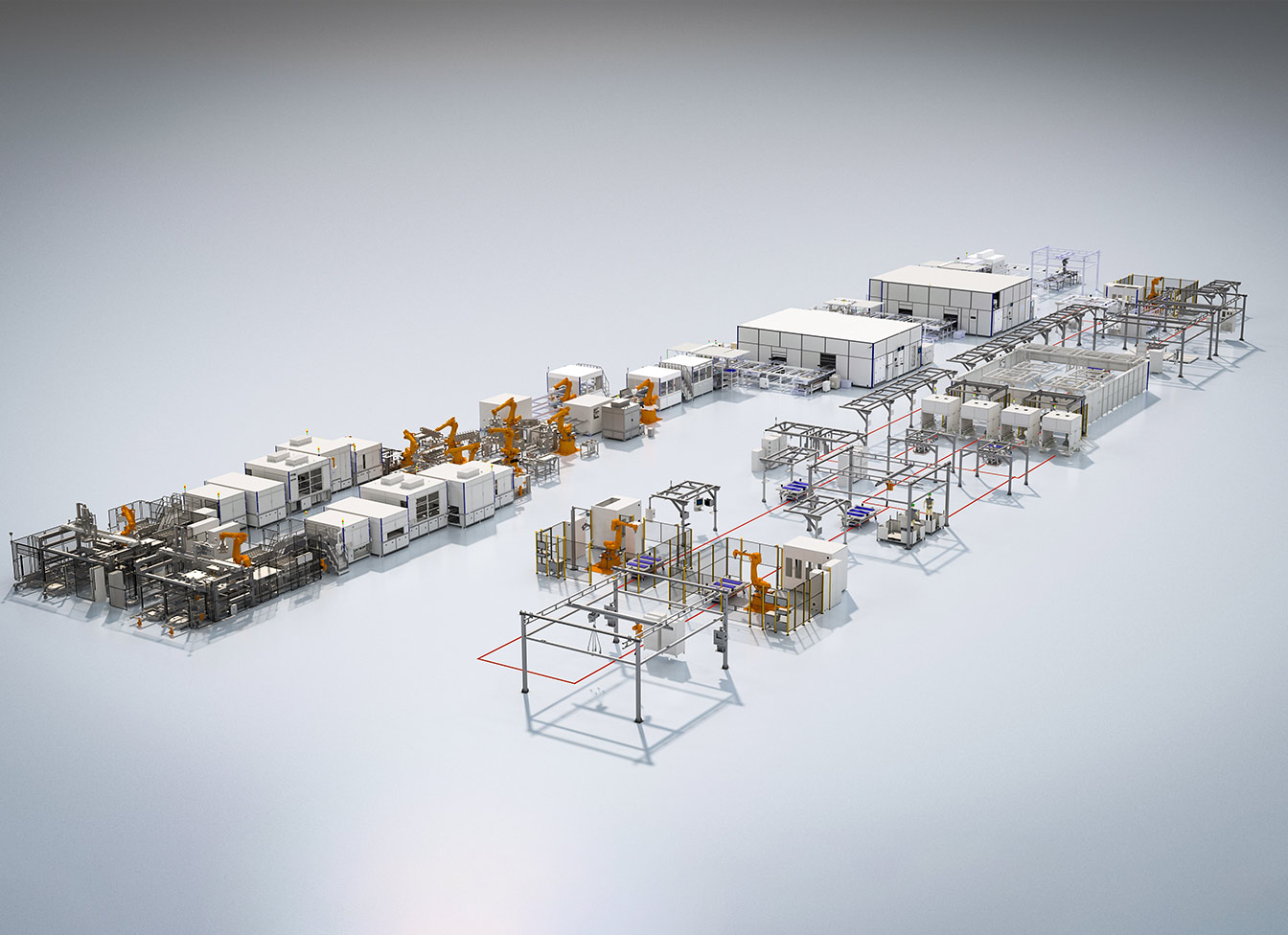
The problem: confusion that costs time and product
Lines stall, managers argue, and capital sits idle — because teams confuse automated battery manufacturing equipment (a clever machine) with factory-level automation (an orchestrated system). I’ve spent more than a decade auditing production floors and advising integrators; I still see the same mistake at battery pack assembly suppliers: buying standalone machines and expecting seamless throughput. At a pilot plant I reviewed in Shenzhen, ctp battery modules were held back not by cells, but by poor integration between machines and control logic.

Why the distinction matters now
This isn’t academic. When you conflate equipment with automation you pay three ways: lost cycle time, hidden defects, and ballooning downtime. Equipment is a tool. Automation is the choreography that makes tools perform repeatably at scale. Your metrics will show the difference: one-off high-speed cycles on a bench don’t survive in a 24/7 production rhythm.

Concrete differences you can measure
Look for these practical markers rather than slogans. If a vendor can’t answer these questions clearly, walk away.
- Control scope — Does the system coordinate line-wide sequencing, material tracking and error recovery, or only run a single station?
- Data fidelity — Are process parameters logged, versioned and searchable, or lost in spreadsheets?
- Operator feedback — Is there a single HMI with role-based access, or dozens of vendor-specific panels?
- Changeover handling — Can the system swap recipes and tooling with minimal manual adjustment, or does each change require an engineer?
- Fault isolation — Does the automation limit scrap by isolating defects and rerouting product, or does one fault stop the entire line?
Technical reality: how equipment and automation interact
Machines provide motion, force, heating, vision and signal I/O. Automation binds them: PLCs, MES integration, recipe management, alarms, and traceability. On ctp battery cell handling that means synchronized pick-and-place, laser-weld timing, and real-time inspection feedback. Ask for documented cycle diagrams, not glossy brochures.
Implementation checklist for manufacturers
Use this checklist before signing any purchase order. Each item saves rework.
- Define target OEE, scrap rate and takt time for a full-shift run, not a 30-minute demo.
- Require a FAT with your actual materials and a SAT on your floor plan.
- Confirm open-data protocols — OPC UA, MQTT — to avoid vendor lock-in.
- Validate recipe portability: can a recipe move from test lab to production without reprogramming?
- Insist on fail-safe reroute logic so single-station faults don’t stop the whole line.
- Document maintenance intervals and spare-part lead times for critical consumables.
Common mistakes that break lines
Manufacturers trip over the same faults repeatedly.
- Buying the fastest machine instead of the one that integrates with your MES.
- Skipping traceability design; you can’t target defects if you can’t find them.
- Assuming a vendor’s demo recipe equals production reality.
- Neglecting operator ergonomics and training; automation still needs humans who understand it.
Alternatives and trade-offs—short evaluation
There are three sensible paths depending on your scale and appetite for control:
- Buy standalone equipment and accept manual orchestration — lower CAPEX, higher labor and error rates.
- Purchase vendor-integrated automation suites — faster time-to-run but higher initial cost and potential lock-in.
- Build phased automation: start with modular equipment, then layer open orchestration as volumes justify it — most pragmatic for growing lines.
Final synthesis: choose orchestration over optics
The problem-driven choice is simple: solve the weakest link first. If you want steady throughput and predictable yields, prioritize system orchestration, data traceability and recovery logic over flashy single-station performance. That’s the difference between a line that dazzles for an hour and a line that delivers every shift. Practical experience, clear metrics, and disciplined integration turn equipment into real automation — a reality I’ve seen achieved when teams partner with integrators who understand both machine physics and production choreography, the kind of partner represented by FHS.
