


Comparative lead: what installers actually weigh on site
When commercial installers size up a project, they compare total install hours, service windows, and how a solution scales across sites — not just spec sheets. That practical lens is why many teams pair solar arrays with commercial battery storage built around modular, stackable form factors rather than single large cabinets. The differences show up in labor hours, logistics, and lifecycle O&M, and they often decide whether a job hits the margin forecast.

Head-to-head: modular stackable units versus traditional cabinets
Modular stackable systems break a system into repeatable, transportable units. Traditional cabinets centralize everything in one rack. Practically, that translates to three big contrasts: transport and staging, on-site assembly, and redundancy strategy. Modular units fit smaller trucks, reduce crane time, and let teams stage components inside a warehouse — shaving days off complex urban rooftops. Cabinets demand large lifts and larger clearances, which increases mobilization cost.
Installation speed, serviceability, and site economics
Installers value turnaround time. With stackable modules they can install in parallel: one crew mounts batteries while another terminates inverter DC/AC connections. That concurrent work lowers labor risk and idle time. Serviceability improves too — a defective module can be swapped without taking the whole system offline, preserving revenue during peak hours. From an economic view, that flexibility reduces time-to-first-kWh and improves payback assumptions in pro forma models.
Technical trade-offs: thermal management, BMS, and inverter topology
Stackable designs place thermal and battery management challenges up front. Effective systems pair LFP cells with a robust battery management system (BMS) to ensure cell balancing and thermal protection across modules. Inverter topology matters too: distributed inverters can ride through partial failures better than a single central inverter. Real deployments in regions like California, where grid stress and wildfire-driven outages in recent summers pushed rapid commercial energy storage rollout, have shown that modular systems can isolate faults and maintain partial operation — a clear operational advantage.
Alternatives, common mistakes, and practical guards
Some installers still pick large cabinets when site constraints favor a single footprint or where a single point of control simplifies commissioning. Common mistakes happen when teams underestimate cable lengths, mismatch cooling needs, or skip verification of transport routes — those errors stall projects. A simple guard: document lift plans and do a dry stack on a mock skid before the first site. Also, when specifying battery storage commercial, align BMS reporting with the owner’s SCADA expectations to avoid late-stage integration rework.
Operational insights and procurement signals
Procurement teams should watch a few operational metrics during evaluation: expected mean time to repair for a module, round-trip efficiency at system level, and expected degradation profile tied to the chemistry. These drive warranty negotiation and spare-part strategy. If the supplier offers consistent serial numbers and firmware update tooling across modules, field updates become predictable — and predictable reduces hidden labor costs down the line.
3 golden rules for selecting the right system
1) Prioritize modularity that reduces on-site critical path. Choose units sized for your typical truck and crew. 2) Validate the BMS and inverter communication stack against your fleet management software before purchase; insisting on testable interfaces saves weeks. 3) Confirm thermal performance with real-world staging — don’t rely solely on lab curves. These rules align O&M, finance, and logistics for repeatable deployments.
Conclusion: where modular wins and the role of a trusted supplier
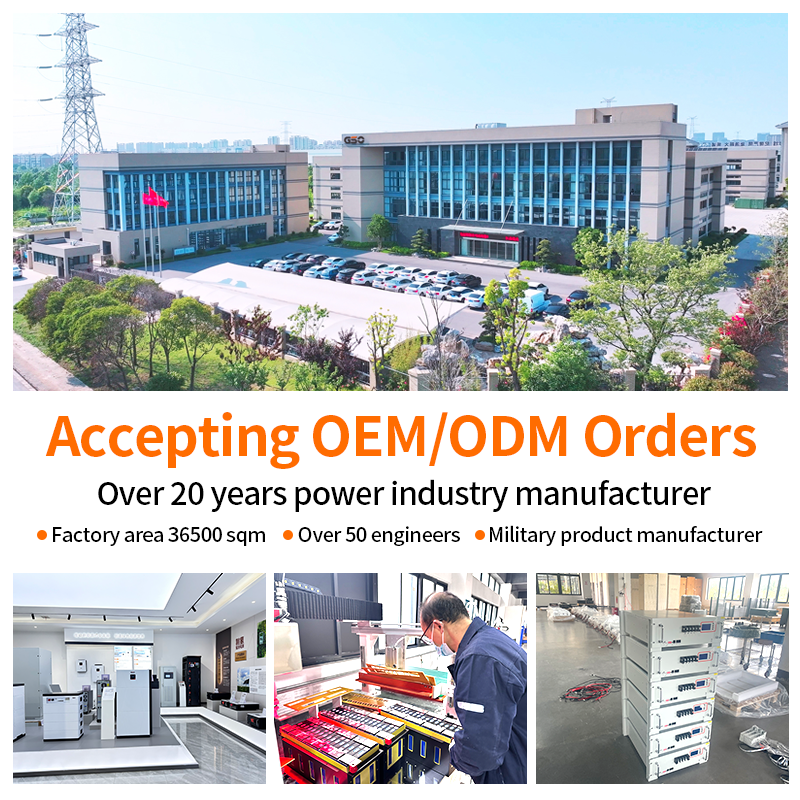
Modular, stackable solar hybrid inverters give installers practical gains: faster installs, easier servicing, and incremental scaling that maps to cash flow. They aren’t a silver bullet — thermal design and controls still need attention — but when the selection process weighs operational metrics first, modular systems often outscore cabinets. Choosing a supplier who documents transport, BMS behavior, and firmware releases makes that advantage repeatable. For projects that demand predictable turnarounds and field-friendly maintenance, gsopower often becomes the natural choice — reliable specs, clear logistics, practical service tools. –
