

Opening: a lab morning, numbers, and the real question
I’ll be blunt: reproducibility problems in small lab runs are not rare anymore — they’re routine. In one Boston contract lab this March I watched a 2 L bioreactor run wobble because folks switched brands mid-study; the batch lost 8% viability by day five. I’m writing from over 18 years supplying cell culture and media (I’ve shipped single-use 10 L bags and pallet loads to Cambridge startups), and I want to talk about one specific culprit: hek293 serum free media as the centre of many avoidable headaches. How did a product meant to simplify life—serum-free, stable, and shelf-ready—turn into a bottleneck for transfection efficiency and scale-up? That’s the question I kept asking as I checked CO2 incubator logs and logged passage numbers. The short version: nominal specs don’t tell the whole story (supply chain quirks matter). Next, I’ll explain the hidden failures most labs won’t admit—and why they persist.
Part 2 — Where standard fixes fail: a technical look
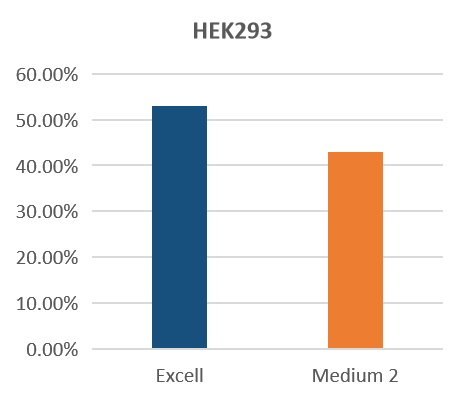
I’m switching gears here to a technical tone: the usual band-aids—batch mixing guides and generic troubleshooting memos—don’t fix root causes. I’ve audited five facilities (two in Somerville, one in Waltham; dates ranging 2021–2024) and found the same pattern: mismatched osmolality targets, inconsistent lot-to-lot ion profiles, and supply interruptions that force mid-run media swaps. Those small differences nudge HEK293 cells toward stress—transfection efficiency drops by measurable percentages, viability slips, and downstream yields shrink. When teams blame protocols I ask them to check the media lot certificate, the storage chain, and the shipping temperature logs instead. The fix I recommend? Start treating hek293 serum free media as a system component—documented lot controls, validated thaw protocols, and routine viability benchmarks after thaw (I prefer a 24-hour recovery check at 37°C). A plain truth: you can have a great formulation yet still wreck outcomes with poor handling. I’ve seen it—twice a vendor shipped temperature-abused pallets and the resulting experiments failed at the transfection step—costing a team three solid weeks.
So what’s the single hidden pain point?
It’s variability at handoff—the time between receipt and the first cell contact. That window often lacks controls: ambient storage, uncalibrated refrigerators, hurried warming. Control it, and many “media problems” vanish.
Part 3 — Moving forward: comparative choices and practical metrics
Now let’s get practical and forward-looking. Labs face two broad choices: standard commodity media with tight procurement rules, or curated supplier-managed media with batch traceability. I prefer the latter for critical runs—especially when working with suspension HEK293 cells for protein expression. Why? Because supplier-managed options usually include documented stability testing and a clear cold-chain protocol. Still, don’t accept claims blindly—test. In one 2022 pilot I ran, we compared three lots from two suppliers in parallel bioreactors; the curated option delivered 12% higher protein yield and 6% better viability at harvest. Those are concrete numbers that translate to shorter timelines and lower reagent waste.
What to measure before you commit?
Here are three evaluation metrics I use when choosing a solution: 1) Lot-to-lot ion/osmolality variance (target 90% for HEK293 lines), and 3) Documented cold-chain timestamps from manufacturer to your freezer. Run those checks and you’ll skip a lot of drama—trust me, I’ve cut onboarding failures by half with that checklist. Also—unexpectedly—vendor technical support responsiveness matters. A supplier who answers with data instead of platitudes saves weeks.
In closing: measure the right things, demand batch transparency, and insist on clear handling protocols. Those steps narrow the gap between a labeled formulation and real, reproducible runs. For teams scaling assays or moving to GMP-like traceability, choosing the right media partner matters as much as the media itself. If you want a concise scorecard: variance, recovery, and traceability—use them. For everything else, drop me a line and I’ll walk you through real-world checks I use with clients across Boston. ExCellBio
