

Introduction — a simple question that matters
Have you ever walked into a busy bodyshop and felt the air tighten up—like the room itself is holding its breath?
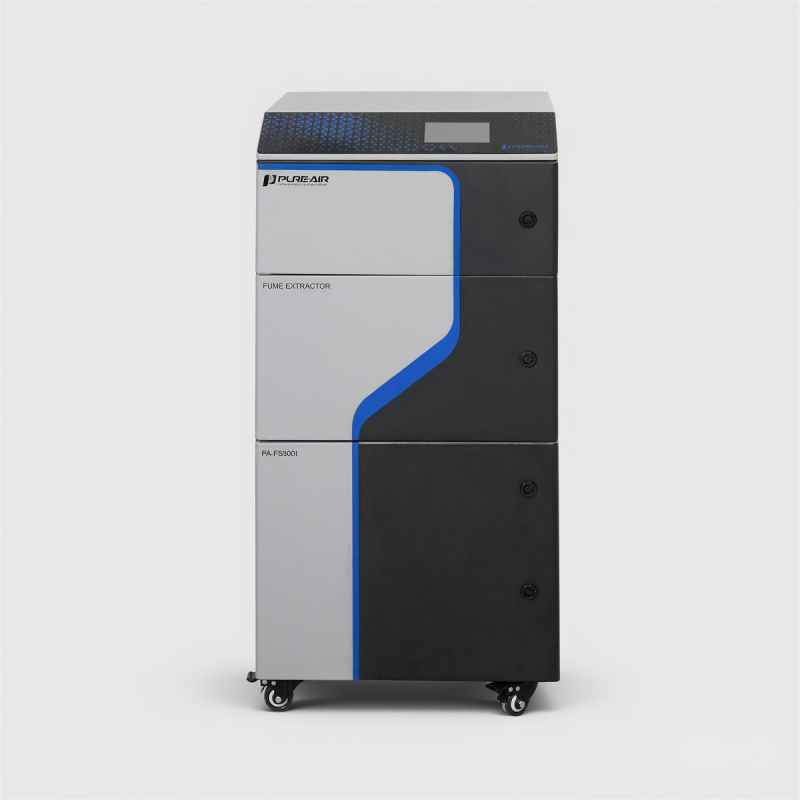
I work with factory teams regularly, and when we measure airborne contaminants we see automotive manufacturing welding fume extraction called out as the top priority on inspection reports, with many shops reporting particulate levels that exceed recommended thresholds (sometimes by 20–60% depending on process and shift). So: how do you design systems that scale with production, protect workers, and stay affordable without constant firefighting?
Think of this next section as a systems design checklist—structured, layered, and built to scale—where we break down common failure points and practical fixes before we pick technologies. I’ll walk through real problems and realistic trade-offs so you can judge what fits your floor plan, your production mix, and your maintenance capacity.
Part 1 — Why traditional extraction systems miss the mark (technical lens)
vehicle exhaust extraction system installations often begin with good intent: a hood, a fan, ductwork. But those pieces alone don’t guarantee clean air. I’ve seen well-sized fans choke on poor layout, hoods that create turbulence instead of capture, and filtration media that loads up rapidly because of inadequate pre-separation. These are not mystical failures — they are engineering misses: wrong capture velocity, poor hood geometry, and lack of maintenance access.
Local exhaust ventilation, downdraft tables, and HEPA filters are common terms you’ll hear (and they matter). Yet the real trouble starts when systems ignore airflow balance across a production line. If one cell pulls too hard, another loses capture. If ductwork has abrupt bends or too many take-offs, pressure drops spike and motor heat rises. Look, it’s simpler than you think: measuring at the hood and at breathing height will tell you more than a spec sheet ever will.
Why do these systems fail in practice?
Often because the solution was selected on purchase price not on measured performance. Filtration media performance degrades with greasy welds and spatter — without pre-separators or cyclones, HEPA life shortens. HVAC integration is another hidden pitfall: makeup air and building pressurization directly influence capture efficiency. I’ve had teams surprised to learn their extraction success dropped when winter doors closed — that’s HVAC coupling in action. Address those interactions early.
Part 2 — What comes next: principles and practical upgrades
Upgrading to a modern vehicle exhaust extraction system is not only about swapping fans. It’s about layered control: source capture, primary separation, fine filtration, and system intelligence. I recommend starting with predictable physics—capture velocity and containment—then add smarter elements like variable-speed drives, differential pressure monitoring, and targeted filtration stages to extend HEPA life.
New principles that matter: staged filtration (cyclone → cartridge → HEPA), modular duct sections for easier balancing, and monitoring that gives you actionable alarms (not just lights). Edge computing nodes can provide local analytics to flag a clogged filter or a failing fan motor before it forces a shutdown — reducing downtime and maintenance surprises. We’re talking practical resilience, not flashy add-ons.
Real-world impact — what improvements look like
In workshops where we made these shifts, particle counts at breathing height fell by roughly half; filter change intervals stretched from weeks to months; and energy use dropped because variable-speed fans ran only when and where needed. Costs came down over the first year of operation. — funny how that works, right? The point is measurable gains, not vague promises.
Part 3 — Choosing the right modern system (semi-formal, action-oriented)
When I advise teams, I frame the choice around three practical evaluation metrics: capture performance, maintainability, and total operating cost. Capture performance is verified by measurements, not vendor claims. Maintainability asks whether your crew can swap a cartridge or access a fan safely in minutes, not hours. Total operating cost folds in energy use, filter spend, and unplanned downtime. If a system scores well on all three, it’s usually a sound investment.
What’s next? Look for systems that integrate monitoring dashboards, allow phased upgrades (start with local hoods, add central filtration later), and offer flexible ducting for evolving layouts. Consider solutions that work with existing HVAC rather than fighting it — balance is everything. I’m telling you this because we’ve seen plants adopt staged rollouts successfully. Small pilots, quick feedback, then scale.
Here are three actionable metrics I use with clients to evaluate any extraction upgrade:
1) Capture Verification Rate — percentage of weld stations meeting target particle counts under normal operations. 2) Mean Time Between Filter Change (MTBFC) — realistic life prediction under your weld mix. 3) Energy per CFM Delivered — how much power the system needs to move the required air volume efficiently.

Apply these, and you’ll separate marketing from reality. — and yes, you will find trade-offs; every shop does. If you want a partner that combines practical engineering with tested equipment, consider the options at PURE-AIR. I’ve seen their systems in action and they balance capture, filtration life, and serviceability in sensible ways.
